LEGO Unveils Its Largest Set Yet: Gaudí’s Architectural Legacy Rebuilt with the 12,060-Piece LEGO Sagrada Família
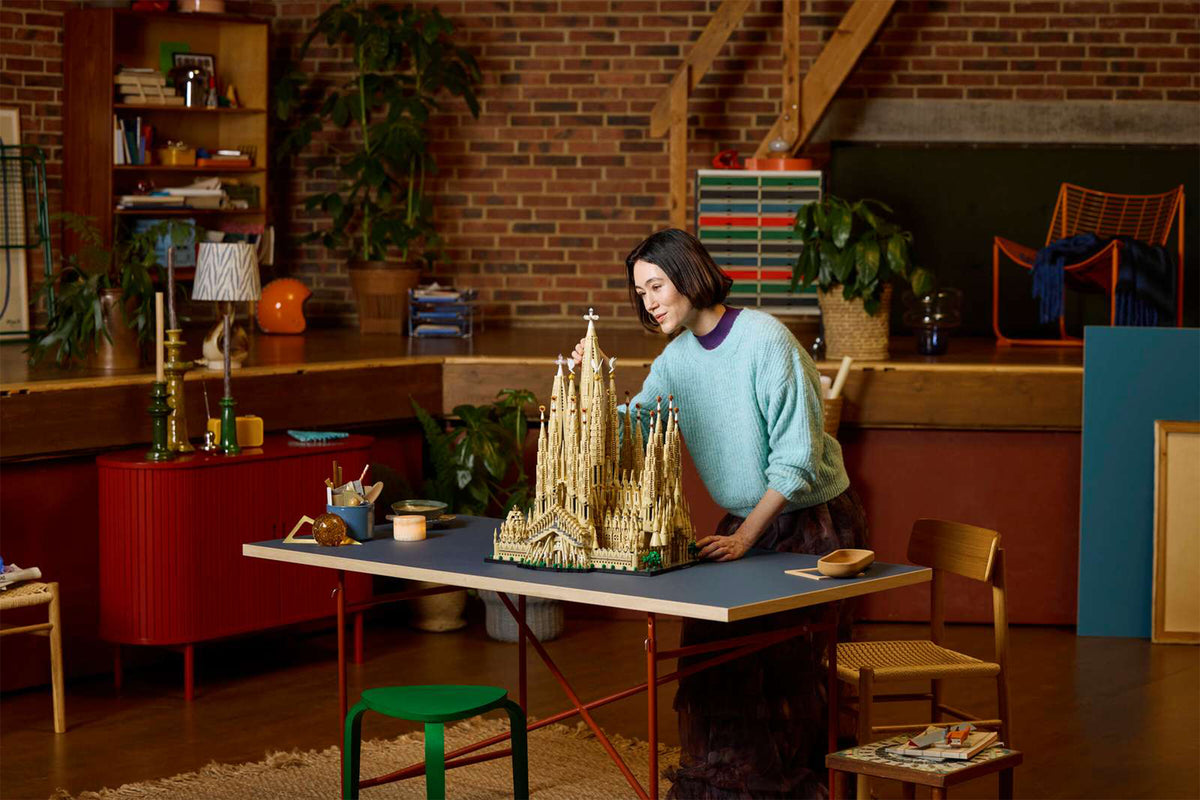
LEGO has unveiled one of the most ambitious sets ever created at the intersection of architecture, design, and collecting: the LEGO Architecture Sagrada Família 21065. Inspired by Antoni Gaudí’s iconic basilica in Barcelona, this remarkable set consists of an astonishing 12,060 pieces, making it the largest LEGO set ever released by piece count. The LEGO Sagrada Família is among the most ambitious additions to the LEGO Architecture series introduced in 2026. Reimagining the world-famous Sagrada Família Basilica, the masterpiece to which Antoni Gaudí dedicated much of his life, the set captures the spirit and complexity of one of the world’s most celebrated architectural landmarks through LEGO bricks. Bearing the product number 21065, the model stands apart from traditional LEGO Architecture releases thanks to both its monumental scale and extraordinary level of architectural detail. While previous sets in the series have highlighted landmarks and cityscapes such as the Eiffel Tower, the Empire State Building, Tokyo, Paris, and London, the Sagrada Família elevates the category to an entirely new level of ambition. What makes this set truly unique is not simply its size. LEGO has designed the building experience to mirror the real-life construction story of the Sagrada Família itself. Rather than assembling a static model, builders follow a process that reflects the basilica’s gradual development over time. As a result, the experience becomes more than model-making. Each stage of the build offers insight into the evolution of Gaudí’s vision, allowing users to engage not only with the architecture but also with the history and ongoing legacy of one of the most extraordinary buildings ever conceived.


How Many Pieces Are in LEGO’s Largest Set?
The LEGO Architecture Sagrada Família (21065) consists of 12,060 pieces, making it the largest LEGO set ever released by piece count. At this scale, the model goes far beyond being a traditional hobby product; it becomes a long-term building project that demands patience, focus, and dedication, while ultimately serving as a striking collectible display piece. As LEGO continues to expand its portfolio of adult-focused sets, large-scale architectural models like the Sagrada Família are increasingly appealing not only to LEGO enthusiasts but also to those interested in design, architecture, art, and collecting. The set is designed as both a building experience and a showcase object, bringing one of the world’s most celebrated landmarks into brick-built form. LEGO Sagrada Família Technical Specifications:
Set Name: LEGO Architecture Sagrada Família
Set Number: 21065
Piece Count: 12,060
Recommended Age: 18+
Height: Approximately 62 cm (24.4 in)
Width: Approximately 39 cm (15.4 in)
Category: LEGO Architecture
Theme: Architecture, Travel, History, Collecting, Adult LEGO Sets
Global Release Date: November 1, 2026
Pre-Order Date: June 4, 2026
Why Sagrada Família?
The Sagrada Família is not only the defining symbol of Barcelona but also one of the most significant works in the history of architecture. Construction began in 1882, but the project took on an entirely new identity when Antoni Gaudí assumed leadership in 1883. Gaudí combined Gothic architecture with organic forms, nature-inspired structural systems, and rich symbolic details to create a design language unlike anything seen before in ecclesiastical architecture. What makes the Sagrada Família so compelling is that it is often perceived less as a completed monument and more as a living, evolving architectural organism. Built across generations, it stands as a rare testament to the union of patience, faith, engineering innovation, and artistic vision. Its ongoing construction has become an integral part of its identity, making it one of the most fascinating architectural projects ever undertaken. LEGO’s decision to recreate the Sagrada Família is therefore far from accidental. The basilica represents one of the clearest examples of an architectural system that grows from individual components into a monumental whole. In many ways, it embodies the same philosophy that defines LEGO itself: countless small pieces coming together to create something complex, meaningful, and enduring.
A Tribute to Antoni Gaudí’s 100-Year Legacy
The year 2026 carries a special meaning for the Sagrada Família, marking the 100th anniversary of Antoni Gaudí’s death. In this context, the launch of the LEGO Architecture Sagrada Família set transforms it from a collectible model into a cultural act of remembrance. Rather than being just a display piece, the set becomes a tribute to one of the most influential architects in history.
Throughout his career, Antoni Gaudí devoted much of his life to the Sagrada Família. His architectural language—shaped by nature-inspired column systems, a deeply symbolic approach to façades, a unique relationship with light, and a strong spiritual atmosphere—defines the identity of the basilica. Today, the Sagrada Família is not only a place of worship but also one of the world’s most visited and studied works of architecture, engineering, and art history. By translating this complex architectural language into a detailed, small-scale model, LEGO makes Gaudí’s vision more accessible and readable. In this sense, the set becomes more than a replica; it serves as an educational and inspirational tool for architecture students, designers, and enthusiasts of form and structure.
A LEGO Experience That Follows the Real Construction Process
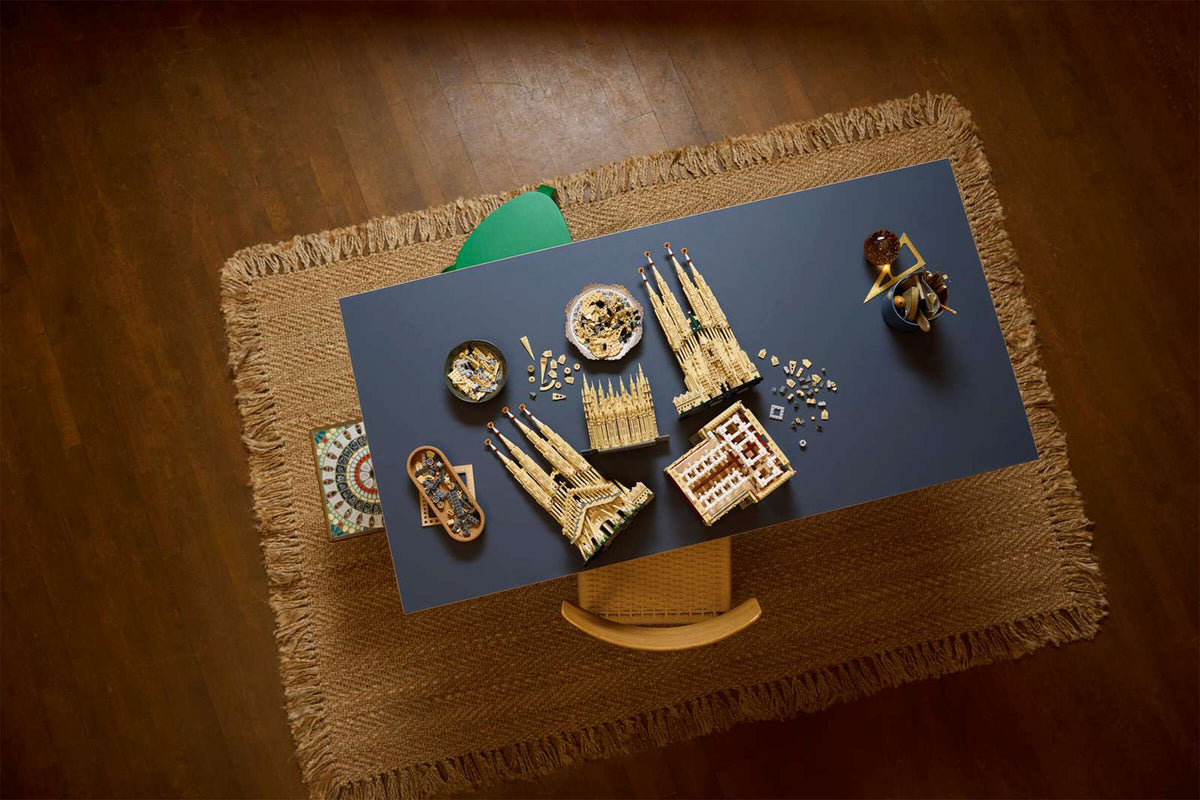
One of the most remarkable aspects of the LEGO Sagrada Família set is that its building sequence is inspired by the actual construction phases of the basilica. Instead of following a purely technical assembly order, the model mirrors the evolution of the real structure. The build generally follows this progression:
Apse and Crypt
The set begins with the foundational and historical core of the basilica, establishing the structural base of the model.
Nativity Façade
One of the few façades completed during Gaudí’s lifetime, the Nativity Façade is among the most symbolic and detailed sections of the entire structure.
Passion Façade
With its more dramatic, angular, and narrative architectural language, this section adds emotional intensity and contrast to the model.
Naves and West Sacristy
These elements shape the interior volume of the basilica, bringing a sense of scale and spatial depth into the LEGO build.
Six Iconic Towers
Defining the basilica’s skyline, the towers become the most visually striking moment of the completed model.
East Sacristy and Glory Façade
The final stage completes the composition, bringing the entire structure together as a unified architectural whole.
This narrative-driven construction process shifts the experience away from outcome-focused building toward something more interpretive and architectural. What makes the LEGO Sagrada Família distinctive is precisely this approach: it does not only represent the building visually, but also reflects its historical and structural evolution layer by layer.

Stained Glass Effect and 360-Degree Architectural Detail
One of the most powerful elements associated with the Sagrada Família is the way light transforms the interior space. In Antoni Gaudí’s architectural vision, light is not merely a functional necessity for illumination—it is a fundamental design tool that shapes the building’s spiritual atmosphere. It defines mood, depth, and meaning within the structure.
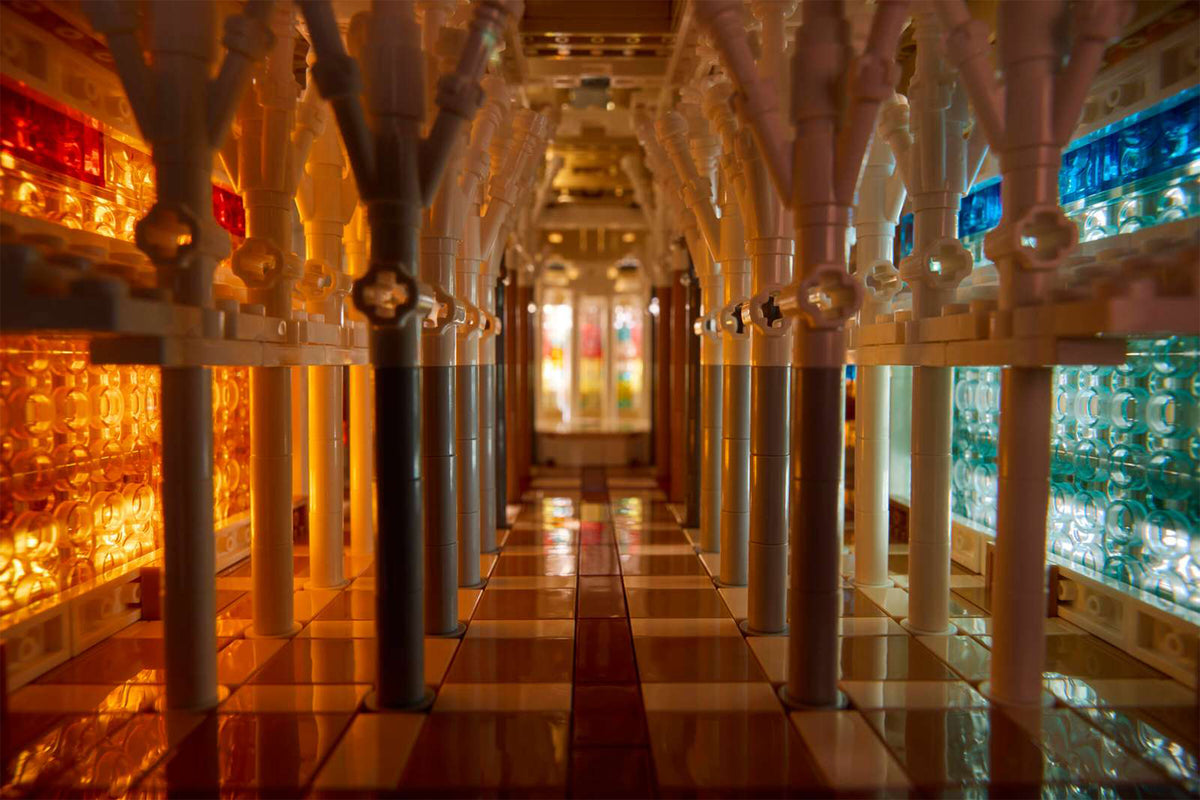
In the LEGO Architecture Sagrada Família set, this effect is reinterpreted through specially designed transparent and semi-transparent pieces. These colored elements evoke the stained glass ambiance of the basilica, translating its iconic play of light into a scaled, physical form. This detail elevates the model beyond a purely exterior-focused replica, adding a sense of interior atmosphere and architectural wholeness.
Another important aspect is that the model is designed to be appreciated from every angle. The Sagrada Família is not a building meant to be understood from a single viewpoint—it is a fully immersive, 360-degree architectural experience. The LEGO version reflects this by preserving its multi-directional character, encouraging viewers to explore its façades, towers, and structural details from all sides.
A New Chapter for the LEGO Architecture Series
The LEGO Architecture series has long been known for translating iconic buildings and city skylines into collectible form. However, the Sagrada Família set represents a new threshold for the series in several key ways:
It is significantly larger in scale.
It offers a more detailed and layered building experience.
It extends the construction process into a longer, more immersive journey.
It bridges architectural history with collectible design culture.
It strongly emphasizes its role as a decorative object.
Especially for those who incorporate architectural pieces into home or office interiors, the LEGO Sagrada Família becomes more than a model. Once completed, it transforms into a statement object—62 cm tall, visually commanding, and capable of anchoring an entire space as a conversation piece that reflects architectural interest and taste.
Who Is the LEGO Sagrada Família For?
This set reaches beyond traditional LEGO audiences and appeals to a much broader group, including:
Architecture students and practicing architects.
Interior designers and design professionals.
LEGO Architecture collectors.
Barcelona and European travel enthusiasts.
Admirers of Antoni Gaudí.
Adult LEGO set enthusiasts.
Those interested in decorative and artistic objects.
People seeking long, focused, mindful hobby experiences.
Collectors of premium design objects.
Rather than being a quick build, the set is designed for those who appreciate slow, detail-oriented construction. In this sense, it aligns closely with current trends such as mindful building, slow hobbies, and collectible architectural objects—offering not just a model, but a sustained and immersive experience.


Why Is the LEGO Sagrada Família So Important?
Being the largest LEGO set ever released, the LEGO Architecture Sagrada Família immediately becomes a headline-making launch. However, its true significance goes far beyond its 12,000+ piece count. This set demonstrates how cultural heritage can be reinterpreted through a contemporary design language. On one side stands a basilica that has been under construction for more than 140 years. On the other, a system of small plastic bricks capable of reconstructing entire worlds. When these two meet, the result is not simply a toy—it becomes a modern narrative that makes architectural history more accessible. In this sense, the LEGO Sagrada Família operates simultaneously as a design object, an architectural model, a collectible piece, and a form of cultural storytelling.
How Sagrada Família’s Architecture Is Translated into LEGO
The architecture of the Sagrada Família is built on dense symbolism and complex geometry. Organic column structures, soaring towers, sculptural façades, and stained-glass light effects make it one of the most recognizable works in architectural history. In the LEGO interpretation, these elements are not replicated at full scale but reimagined through a carefully considered abstraction. The iconic silhouette of the basilica, the layered depth of its façades, the rhythm of its towers, and the sense of colored light are all preserved in a simplified but recognizable form. The vertical emphasis of the towers, in particular, creates a strong upward movement in the finished model—echoing the real building’s sense of aspiration and elevation.
Digital-Assisted Building with LEGO Builder App
The LEGO Sagrada Família set is also supported by the LEGO Builder App, which introduces a digital layer to the construction process. Through the app, builders can follow 3D instructions, rotate and zoom the model, and track their progress step by step. For a set of this scale, this digital guidance becomes especially valuable. Managing over 12,000 pieces requires organization, focus, and clear orientation throughout the build. The app enhances the experience by combining traditional physical construction with digital clarity, making the process more structured, intuitive, and engaging.

Is the LEGO Sagrada Família an Investment Piece?
In the world of collecting, large-scale LEGO sets tied to special launches often attract significant attention. The LEGO Sagrada Família can also be evaluated as a potentially high-value collectible due to its status as the “largest LEGO set ever released” and its symbolic connection to the 100th anniversary of Antoni Gaudí. While it is never possible to predict the future market value of a LEGO set with certainty, factors such as limited-time interest, architectural significance, high piece count, appeal to adult collectors, and the prestige of the LEGO Architecture series may contribute to its long-term desirability as a collectible object.
When Will the LEGO Sagrada Família Be Released?
The LEGO Architecture Sagrada Família (21065) was made available for pre-order on June 4, 2026. The global release date is set for November 1, 2026. This timing places the launch just ahead of the holiday and year-end gifting season, which could further increase interest from both collectors and premium gift buyers.
Conclusion: A Tribute to Architectural History
The LEGO Sagrada Família is significant not only because it is the largest LEGO set ever created, but also because of its cultural and architectural meaning. Standing out as one of the most notable design launches of 2026, the 12,060-piece set brings together Gaudí’s timeless vision, the layered construction history of the Sagrada Família, and LEGO’s creative building system. The result is more than a toy: it is a collectible, buildable interpretation of an architectural landmark. For those interested in architecture, design, travel, and collecting, the LEGO Architecture Sagrada Família 21065 is not just a set—it is a sculptural design object that transforms any space once completed. In short, with this release LEGO not only introduces its largest set to date, but also delivers a contemporary and creative tribute to Gaudí’s enduring legacy.